Clara & Alex, Sunday Bedding: Building One of Singapore’s Best Bedding Brands While Losing Sleep As New Parents
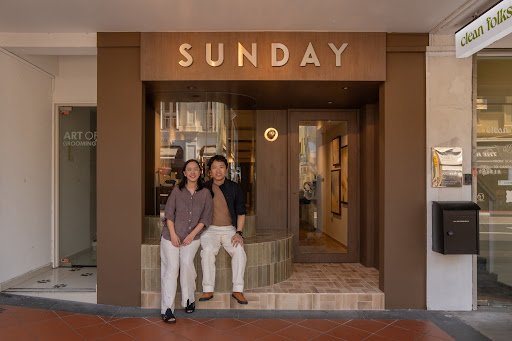
Alex and Clara Sunday Bedding Founders at Sunday Bedding Store

Today, Sunday Bedding is one of Singapore’s top bedsheet brands, with two retail stores in Singapore and a loyal customer base that keeps coming back. Clara and Alex have built a brand that people bring into their most personal spaces, and in some cases, their most difficult moments. But it started with a frustrating afternoon in a department store, a thirty-year family textile legacy, and two founders who had no idea that their hardest lessons were still ahead of them. How a Shopping Trip & a Family Factory Started Sunday Bedding Clara did not set out to build a bedding brand. She had built a career in management consulting, completed her MBA at Columbia University, and was working in data analytics at Amazon in Seattle when she met Alex. When Alex relocated to Singapore, the two of them went shopping for sheets for their first home together. It was genuinely frustrating. “Department stores, not much choice, zero transparency, and so much confusion around thread count. Everything was marketed as ‘high thread count’ but you had no idea what you were actually buying.” What made it worse was that Alex came from a family with over thirty years in home textiles manufacturing. They knew exactly how these products were made, and that what they were looking at was not worth it. That frustration, combined with Alex’s manufacturing background and Clara’s commercial and e-commerce interests, became the foundation of Sunday Bedding in 2018. The first thing they did was sit down with the merchandisers at Alex’s family factory. These were people who had worked with major global retailers and seen every fabric construction imaginable. Clara and Alex asked for something designed for Singapore’s heat. The answer was bamboo. Back then, bamboo bedding was barely a thing in Singapore. They launched with two solid neutral colours and one printed design created in collaboration with a New York-based artist. Clean, considered, and nothing like what was already on the shelf. The Mall Leases That Nearly Broke Sunday Bedding For the first stretch, Clara kept her full time role at her job while Alex ran the business day to day. Mornings and evenings were for Sunday Bedding. Everything in between was her day job. It was a deliberate choice, one that let them test, learn, and build momentum without betting everything at once. By the time Clara made the leap to full time, the business had enough traction to feel confident about. Then came the decision that nearly undid all of it. Clara and Alex signed two mall leases simultaneously. It also happened to be around the time Clara was pregnant. Looking back, they were not in the right headspace. They had not done enough due diligence. And they had seriously underestimated how different running a physical retail space would be compared to running an e-commerce business. “The two to three years during that period were really challenging. It stretched us thin in every sense. Financially, physically, emotionally.” Those years were not about growth. They were about survival. Every week was firefighting. There was no headspace for strategy, no bandwidth to push the business forward. Just the relentless work of keeping the stores open and getting through each day. When they finally exited the leases, it was painful. But it was also a relief. “We could finally lift our heads up again and think clearly.” What came out of those years was not just recovery. It was a fundamental shift in how Clara and Alex made decisions. Before, they said yes to every opportunity, every collaboration and every potential channel. After that phase of their business, they became deliberate about everything. “Now we are much more intentional with every decision we make.” A Complicated Pregnancy & the Hardest Year of Their Lives In the middle of building Sunday Bedding into what it is today, Clara and Alex became parents. And worst still, Clara’s pregnancy was far from an easy one. She experienced preeclampsia and delivered five weeks early via C-section. Their daughter Emma spent time in a neonatal intensive care unit. Clara was travelling to and from the hospital to visit her while recovering from the birth, exhausted in a way that went beyond anything the business had ever asked of her. To help them manage their parenthood better, Clara and Alex divided the night feeds. Clara covered the 4am feed. Alex took midnight. Even with that structure, their sleep was fragmented, the anxiety was real, and the mental load never fully switched off. Clara was tracking Emma’s schedule, managing the household, running a business, and recovering from a difficult birth all at once. “It’s not just about the task itself. It’s also about the planning required behind each task. There are so many small things to keep track of, every hour of every day.” What carried them through was the same thing that had carried them through the mall lease years. The commitment to keep going, and the reminder of why they started. One message in particular stays with Clara. A customer wrote to tell them that his wife had a chronic illness and spent long stretches in hospital. What brought her comfort during those stays was the bedding she had bought from Sunday Bedding. She had brought it with her. “We sell bedsheets. We are not saving lives. But to know that something we made brought a little comfort to someone going through something really difficult, that means everything.” The Lesson Clara and Alex Carry Clara and Alex did not build Sunday Bedding by spotting a gap in the market. They built it because they experienced the frustration firsthand, had the background to do something about it, and refused to walk away when things got hard. The mall leases taught them to be intentional. Parenthood taught them to be present. And the customer whose wife brought their sheets to hospital reminded them that what they had built was real and that it mattered to people. If there is one thing Clara would … Read more

Mr Shah, Titanium Limousines: From Shameful Debt to Building One of Singapore’s Best Limousine Companies

Titanium Limousines Company Website Screenshot With Book Your Limousine CTA Button

Today, Mr Shah runs Titanium Limousines, one of the most established limousine companies in Singapore serving corporate clients, event companies, and families island-wide. He has driven motorcades for the Ministry of Foreign Affairs, handled VIP transfers for Resort World Sentosa, and built a fleet of 15 vehicles from nothing. But for most of his twenties, Mr Shah was the person his family was rather ashamed of. Gold hair, tattoos, gambling debts he could not count. He was a waiter captain whose tips had dried up, whose debts were mounting, and whose options had run out. This is the story of how he built his way back. The Job That Changed Everything Mr Shah was managing waiters at a karaoke lounge in Singapore when the entertainment industry slowed and the tips stopped coming. He was already carrying heavy gambling debts. With a wife, three children, and no savings, he needed a way out fast. A regular customer at the lounge mentioned he was running limousine transfers for Marina Bay Sands, which had just opened. He had 50 to 100 vehicles stationed at the hotel and was paying drivers $10 an hour around the clock. Mr Shah asked if he could drive. The answer was yes. “I started to bring my toothbrush, my bath towel, and sit inside the car all day just to work non stop.” He worked for 5 days straight without going home. Then longer. At $240 a day working around the clock, he calculated he could clear $6,000 to $7,000 a month if he never stopped. So he did not stop. He quit gambling, packed his life into a duffel bag, and lived out of the car at the hotel. For the first time in years, he had a clear plan to settle his debts. Learning the Business the Hard Way Three months in, the Marina Bay Sands contract ended. The car owner Mr Shah worked for suddenly had five vehicles and almost no jobs. Mr Shah went back to him anyway, and after some back and forth, they worked out an arrangement. Mr Shah would go out and find his own clients. He would drive the car owner’s vehicle, cover his own petrol costs, and handle all client collection himself. Whatever total sales he brought in, they would split 50/50. During those days, there wasn’t Grab, Uber or any other digital taxi booking platforms to book a taxi in Singapore. “You had to go wherever you could find customers. Coffee shops, airports, wherever you could find drivers. You needed to sit down, drink coffee with them.” Mr Shah learned which drivers sat at which coffee shops near the airport. He showed up, drank kopi, and asked if anyone had jobs they needed covered. They gave him the ones nobody else wanted: the 1am runs, the 3am airport pickups, the Jurong Island transfers at 6am. He took every single one. Monthly sales hit $10,000. But collecting that money from other drivers was a different battle. Everyone paid late. Some did not pay at all. Mr Shah was still handing over 50% to the car owner regardless, draining whatever buffer he had built. Then the car owner did something that pushed Mr Shah out for good. Once he saw that Mr Shah could generate his own sales independently, he stopped giving Mr Shah any jobs at all. His logic was straightforward: Mr Shah could find work himself, so the available bookings should go to the other drivers who could not. Mr Shah was covering every aspect of the business: driving, finding clients, chasing payments, while being sidelined from the very jobs he had first helped create. He stayed two more months hoping things would change. They did not. By then, the financial strain had already forced the family to make a drastic move. Mr Shah had relocated his wife and children from Singapore to Johor just to cut costs. They had to make 5am causeway crossings every day, his kids were waiting at school until evening, and it was not sustainable any more. He quit. Told the car owner he was done, handed back the keys, and spent the next month doing nothing. He had no income, no plan, a family in Johor, and his debts still unpaid. Then one idea surfaced. His Mother’s Last $31,000 Mr Shah had a small old car. If he sold it and topped up another $30,000, he could purchase a limousine-grade vehicle and offer limousine transport services himself.  The problem was he had nothing left. Zero. He went to his mother. She looked at what was in her account. She only had $31,000. But she still gave him the $30,000 he needed for his limousine vehicle.  “This time if I take her money, I cannot die. Like I cannot lose it. Do or die.” He has never forgotten the weight of that moment. His mother’s entire savings were handed over to him. She believed in him despite all the bad habits that he had engaged in in the past. Mr Shah bought his brand new limousine car. And in 2012, Titanium Limousines was born. One Car a Year, Every Year Year one was relentless. Mr Shah barely went home. He slept in the car, drove through nights, and took every job nobody else wanted. On Valentine’s Day, he left his wife at the cinema when a booking came through. During family outings, he dropped everyone at the nearest hawker centre and went off for his job. His wife struggled to understand it at first. But eventually she did. He cleared his gambling debts in year one. In year two, he cleared nine maxed-out credit cards. Then he bought a second car. Then a third. Then a fourth. One car a year, every year. The fleet grew. The clients grew with it. Titanium Limousines began serving the Ministry of Foreign Affairs, their vehicles in motorcades alongside Traffic Police outriders, carrying ministers and foreign dignitaries. They held a contract with Resort World Sentosa for … Read more

Sulochana Uthirapathi, Transform Borders: From Near Deportation to Running One of Singapore’s Most Trusted Immigration Agencies

Sulochana Uthirapathi, Transform Borders Singapore

Today, Sulochana Uthirapathi runs Transform Borders, one of the most trusted immigration agencies in Singapore. She has helped families win PR approvals after four consecutive rejections, kept businesses running through Covid-19 border closures, and guided founders through some of the most high-stakes immigration decisions of their lives. But the reason she does this work so personally and so carefully goes back to a mistake she made as a student in Australia that nearly cost her everything. From Corporate Immigration to Something More Personal Back in Singapore, Sulochana built her career at a large global immigration firm. She was sharp, thorough, and effective. But the longer she stayed, the more she noticed a pattern that troubled her. The firm handled volume. Clients were processed efficiently. Cases moved through the pipeline. What often got lost along the way was nuance. Immigration decisions rarely come down to a single document or a straightforward checklist. Personal circumstances matter. How a story is framed matters. Whether someone takes the time to understand what is actually at stake for the person on the other side of the application matters enormously. Sulochana had been that person. She knew what it felt like to have your future sitting in someone else’s hands. And she found it increasingly difficult to be part of a system that treated those moments as routine. So she decided to walk away and build Transform Borders from scratch. “When your entire future is tied to one immigration outcome, you understand very quickly how uncertain and consuming the process can be, even when you have done nothing wrong.” The Year the Industry Was Tested Covid-19 exposed something about the immigration industry that had always been true but rarely discussed openly. Most immigration agencies were built for straightforward, predictable cases. When the world stopped moving, when borders closed, passes were put on hold, and families found themselves stranded across countries, many clients discovered their immigration partner had no real answer for them. Sulochana’s business took a hit too. Transform Borders downsized. There were difficult months. But the difference was that she stayed in it with her clients. While others were waiting for things to normalise, she was reviewing individual situations, finding interim solutions, and making sure the families and businesses she worked with understood exactly what options they still had. For some of them, that guidance was the difference between staying in Singapore and being forced to leave. That period shaped how Transform Borders operates to this day. Why Most PR Applications Actually Fail Here is something most people do not realise about Singapore PR rejections: the problem is rarely the applicant. Sulochana has reviewed enough failed applications to know that a strong salary and solid qualifications are rarely enough on their own. What often makes the difference is whether the most important parts of a person’s story such as their contributions, their roots, their genuine connection to Singapore were properly communicated in the first place. She has seen this play out more times than she can count. But one case in particular stays with her. A woman was rejected four times, not because her profile was weak, but because four previous applications had never told her story the right way. Sulochana restructured the entire application. And the whole family received PR approval. That outcome is not exceptional at Transform Borders. It is what often happens when someone finally takes the time to understand a case properly. The Lesson Sulochana Carries For Aspiring Founders Sulochana built Transform Borders not by spotting a gap in the market, but by living through something that changed how she saw the world. The visa lapse in Australia did not derail her. It redirected her. It gave her something no qualification or training programme could. A firsthand understanding of how frightening immigration uncertainty feels, and a genuine commitment to making sure her clients never face it alone. If there is one thing she would say to any founder sitting on an idea they have not yet acted on, it is this: the businesses that last are rarely built on opportunity alone. They are built on something personal. Something that happened to you. Something you could not walk away from even if you tried. For anyone navigating Singapore’s immigration system, you can learn more about how Transform Borders approaches each case here.

My Story: From $150,000 In Debt To Finding My Purpose

Senthilkumar Subramanian Founder Story of finding my purpose the noteway tshirt printing art studio seo

There was a moment, somewhere in the middle of the pandemic, where I sat across from a mentor and came close to tears. I had spent years building businesses. I had worked harder than most people around me. And yet, nothing seemed to materialise the way I had imagined it would. The debt was real. The anxiety was real. The health problems that came from carrying all the stress and sleepless nights were real too. In that conversation, I found myself questioning things I had never questioned before, including whether any of it was worth it at all. She listened. She did not offer easy answers. But what she said gave me something I had not expected to walk away with: Clarity. Faith. And a newfound Purpose. The Noteway Started With Us Customising Notebooks In 2014, I was a student at NTU, enrolled in an entrepreneurship minor programme that pushed students to start something real. My group and I decided to sell customisable paper notebooks. We called the business, The Noteway. The idea was simple: let people express themselves through the things they used every day. It was a modest start. The notebooks were difficult to personalise, each one at a time, and the business wasn’t scalable. So we pivoted to t-shirt printing, built our own printing facilities, and I took charge of growing the business. Within a few years, the printing business was generating close to half a million dollars in annual revenue, driven almost entirely by Search Engine Optimisation (SEO). Building & Pivoting The Noteway Beneath the revenue numbers, the printing business was struggling. Over-hiring, financial mismanagement, costs that had outgrown our margins. From the outside it looked like growth. Inside, we were making a loss. Alongside the printing business, we had started The Noteway Art Studio. A space where customers could paint on t-shirts, tote bags, and sneakers. When we eventually decided to shut down the printing side, the art studio was rebranded. It became Streaks n Strokes. The Noteway’s brand name did not disappear. I held on to the domain and ran it quietly as a gift blog on the side, which is where our Best Gifts blog category today comes from. The Best Month of My Life, Then the Slump With the printing business behind us, I focused everything on Streaks n Strokes art studio. I applied the same SEO thinking, but sharper. Instead of chasing high-volume keywords with low intent, I targeted searches like “Team Building Activities Singapore” and “Kids Birthday Party Ideas Singapore”, terms with real purchasing power behind them. It worked. Corporate teams booked our art studio on weekdays. Birthday parties filled the weekends. In December 2019, we recorded our best month ever: $60,000 in revenue. Then the first COVID-19 cases appeared in Singapore. Revenue slumped sharply. Capacity restrictions, circuit breakers, a complete halt in corporate events. It all hit our business built on people being together in a room. One by one, seven team members and co-founders left. By the end, I was running the entire operation alone. I pivoted to e-commerce. Art jamming kits for couples and families. Virtual corporate sessions over Zoom. It was enough to keep things moving. But when the pandemic finally eased in 2023, I sat with an honest question: did I actually want to reopen the studio? The answer, when I let myself hear it, was no. Art was never my passion. It had been a business. SEO was the thing that had always excited me. SEO had been the quiet engine behind every business I had ever grown. I sold Streaks n Strokes art studio. And I started over. Starting Over With SEO With Senthil The first version of SEO With Senthil was a $40 course for founders. Two people bought it. Neither took action. It was discouraging. But instead of walking away, I took it as a signal to get closer to business owners, to understand what they actually needed rather than what I assumed they did. I spoke to more people. I refined how I thought about SEO. I moved from selling a course to offering a hands-on programme with unlimited guidance. My early clients started ranking. Even one in the ultra-competitive Singapore real estate market hit Google Page 1 within four months. But as I worked with more businesses, a pattern emerged: most of them did not have time or expertise to execute the work effectively themselves. And SEO was changing rapidly. They needed someone to do it with them, not just advise them. So I pivoted again, from consultant to agency. From teaching SEO to doing it for my clients. The Full Circle I did not start out wanting to build an SEO agency in Singapore. Honestly, I did not start out with a clear purpose at all. I just wanted to make money. From notebooks, from t-shirts, from an art studio. Whatever could work. But somewhere along the way, through the debt, the health struggles, and that quiet conversation with a mentor that changed everything, I realised something. It was never really about the money. The businesses that drained me were the ones I built chasing profit. The work that lit me up was always the same thing: helping other people grow. SEO was the vehicle. But the real shift was deeper than that. It was moving from doing whatever could bring the most profit, to doing what I was actually built for. From chasing success, to creating real impact with the strengths and talents I had been given. In late 2024, I found the right technical SEO partner in Rohith Sai. Where I owned strategy, content, and client growth, he owned the operations and technical side, including site rebuilds, schema markups, and SEO audits. In early 2026, SEO With Senthil became Seedscale Pte Ltd. A full scale SEO agency to help purpose driven businesses grow their revenue using SEO. The Noteway: Where We Go From Here The Noteway has had more pivots than I can count. A … Read more

Roger Kweh, Rodex Movers: How He Built a $1M Moving Company From $3,000 and a Rented Van

Roger Kweh Founder of Rodex Movers story

Today, Rodex Movers is known as one of the best house movers in Singapore. But it wasn’t always this way. Back in 1988, Roger was just a 10 year old boy tagging along with his dad on delivery routes. Roger Kweh, his father, was a delivery contractor taking jobs from multiple companies. He filled in for businesses that had no delivery persons of their own. Roger helped load and deliver, earning pocket money along the way. That early experience stayed with him. Roger’s Bold Decision at 28 Years Old For years after, Roger struggled to hold down a job. He moved from company to company. He quit some. He was let go from others. His longest stint lasted two years, until that too came to an end. It was his breaking point. “I was so fed up. I thought, why not start something myself?” He was 28. He had no savings to speak of. But, he had a plan. Start small doing what he was familiar with, such as moving boxes and household items. Find people who needed his moving services. Convert every single interested inquiry into a sale. But there was a problem.  Roger only had $3000 after scraping together all he could from his own pocket and a loan from a friend.  So he rented a van for $1,100 a month, put down a deposit of $1,100, and spent what was left on classified ads in the Straits Times at $33.50 a day. Every call that came in felt like gold. “I couldn’t afford to lose even one. So I made sure every single call turned into a job.” He priced aggressively to win. A washing machine moved for $30. Single items. Small deliveries. Whatever it took to keep the phone ringing and the van moving. The Day Everything Collapsed Rodex Movers grew. Roger hired workers, took on bigger jobs, and started to believe the hard part was behind him. Then one morning, his entire team walked in and announced they were quitting. Unless he gave them an immediate pay raise he could not afford. They knew exactly how heavy the day’s schedule was. Roger had jobs lined up. But no team to do them. He spent the rest of that day making calls he never wanted to make. Cancelling jobs, issuing refunds, listening to customers threatening to sue his moving company. The bad reviews followed quickly. And so did the advice from people around him. “Friends and relatives told me, maybe you should think of something else.” He had been building Rodex for five years. Quitting meant all of that was wasted. He decided he wasn’t done. Starting His Moving Company Again, Smaller and Wiser Roger scaled back. He rehired carefully, this time with proper written contracts and clear expectations. And he stepped back onto the ground himself. Meeting customers, doing on-site surveys, scheduling the workforce personally. That closeness changed everything. He started hearing directly what customers needed. He tweaked how jobs were scoped and communicated. Good reviews began pouring in.  Returning customers became the norm and referrals followed. “That trust is what we built over the years.” By 2021, Rodex Movers crossed $1 million in revenue. COVID-19 and What Came After Then came 2020. Covid-19. Nobody was moving. His moving company almost came to a halt. Government subsidies helped Roger keep most of his team paid, but the losses were real. What followed surprised him.  When restrictions were lifted, pent-up demand hit all at once. From 2022 through 2024, Rodex Movers was fully booked almost every single month. In 2024, the company acquired its own warehouse and storage facility in Tuas. Today, Roger still visits customers’ homes personally for on-site surveys. He schedules the workforce. He oversees the marketing. He is, as he has always been, hands-on. The Lesson Roger Carries Roger does not talk about his journey the way most people talk about success. He talks about what the hard years did to him. “Whatever happens now, I can tell myself, this is not the worst. This is nothing. I have been through bigger storms. They made me become a stronger person in business.” His goal now is straightforward: to make Rodex Movers a household name in Singapore, the way Grab is synonymous with getting a ride. That ambition, from a man who started with a rented van and $800 left for ads, feels entirely earned.